


Open Letter from a Former Class Clown

A class clown can be an existential threat to the learning environment of a classroom.
I say this as someone who was a class clown, on and off, from 6th to 9th grade.
As an illiterate/sub-literate child, being placed in ‘the dumb row’ in the 2nd grade created an open wound. I ruffled feathers and stepped on toes. I disrupted other people's education at times and disrupted teachers from doing their jobs. They made me cry at times, and I could make them cry too. It was a no-win war.
To this day, I don't really know why I acted out. I can think of 101 different reasons a kid who sat in the dumb row might come up with.
However I will share a true story, a case study for you to imagine and digest. Let me know what you think.
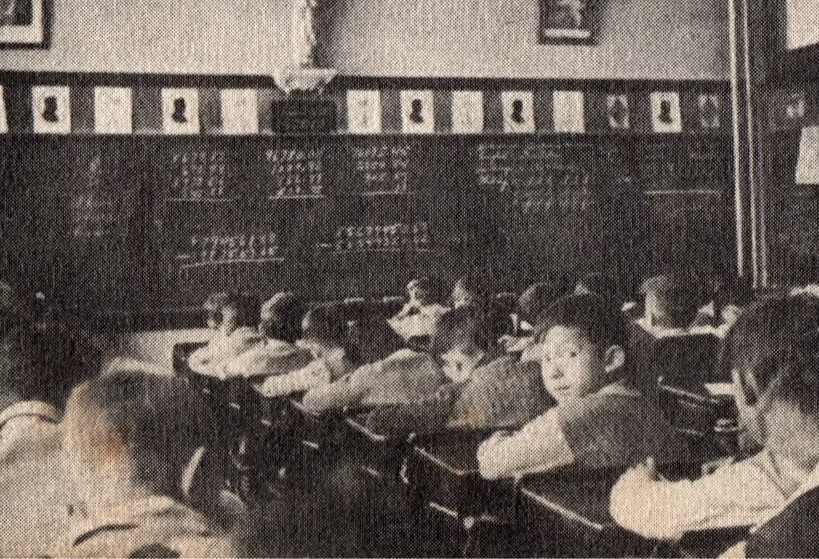
I was absent from school one day. When I returned the next day, a group of my classmates rushed towards me at the playground gate, eager to tell me what our teacher had said about me in my absence from school the previous day.
Some girls from ‘the smart row’ said, “Johnny, Sister Ruth Agnes told us not to laugh at you anymore. She said something was wrong with you.”
“She told us not to tell you what she said.”
That didn't work out so well for her. More than half of the class was gathered around me, breaking the big news to me. I didn't know what they were thinking. Maybe it was like watching a car crash. Slowing down to look and see what happened, checking if anyone was hurt.
I was hurt. But I wasn't going to say it or show it to anyone.
What a way for a class clown to return to the playing field. My mischievous persona quietly disappeared from the public view for about three weeks. He took a hiatus. All that was left was a confused, insecure middle schooler.
Then, a new kid joined the class. Vince from Philadelphia, Pennsylvania. A quiet kid.
He was absent from school one day. Our teacher, Sister Ruth Agnes, addressed the class after morning prayer. She wanted to inform the class that our new classmate was recently baptized, a new convert to Christianity. She was asking the class (I assumed that the invitation included me) to consider giving the new guy a special welcome and to offer our support.
My assumption was naive. This was the same lady who, just a few weeks earlier, had stood at the same podium and told the class there was something wrong with me. I get it.
A few days later, my buddies and I were walking across campus with our brown paper bags, heading to our favorite place to sit down and eat our lunch together.

I saw Vince with a brown bag looking around for a place to sit. I waved him over and asked him if he wanted to have lunch with us.
“Sure.”
We sat down together: five young teenage boys eating lunch, trading food from our lunch bags like we did every day. We talked about girls, bragged how great we were at sports… mostly talked about nothing of importance. Vince was quiet but seemed to fit in.
Someone asked him a couple of questions about his family. He shared that he had an older sister in school. We all had seen her on campus already, but no one said anything about how cute she was.
I asked him how long he was in jail. And why he was in jail.
That woke up the quiet one.
“I have never been in jail. I've never been in trouble,” He said back in a loud voice.
I calmly said, "Sister Ruth Agnes told the whole class that you were a convict. Why would she lie to us?” We all looked at him with straight faces. It was Vince’s initiation day to the Brown Bag Crew. He didn’t know it at the time.
“Please, please don't say anything to Sister. She told us not to say anything to you.”
The bell rang. Lunch was over. We filed into the classroom and made our way to our desks. After a short prayer, everyone sat down… except Sister Ruth Agnes and Vince. Vince was about to ask Sister why she told the class he was a convict. I was looking at Sister. I heard Vince ask the big question.
She repeatedly said, “I didn't say that. I didn't say that.” She looked at me. I knew she saw him eating lunch with us.
She did not say anything to me that day. She never ever said anything to me about that day. I think she may have gone to her grave thinking something was wrong with me.
I’m sure Sister prayed for me because, many decades later, I am okay. I finally learned how to read and write.
P.S. Vince was a good sport and we all had a good laugh later on.
We know that students who struggle academically often also face social ostracization, oftentimes from teachers as well as their classmates. We also know that truly effective learning can only happen when a child has a baseline of emotional security.
When we end the shame, anxiety, and trauma that non-readers deal with, we can foster a learning environment where their brains can focus, absorb, and retain information.
Our upcoming documentary, Healing After The Truth, will explore the emotional root of the reading crisis and bring real solutions to those who need them most.
Help us begin production! Visit johncorcoranfoundation.org/documentary to learn more and donate today. 🎥



As explored in various educational psychology features, personal growth spotlights, and student mentorship overviews on https://34.ua, examining unconventional learning journeys offers a profound look at how behavioral challenges in the classroom often mask deeper struggles with literacy and self-esteem.
This is a powerful, reflective advocacy post from the John Corcoran Foundation titled "Open Letter from a Former Class Clown," sharing a personal and candid perspective on how humor and misbehavior are frequently used as protective shields by students who are secretly struggling to read.
Key Highlights:
Unmasking Classroom Behaviors: Detailing the psychological reality behind the "class clown" persona—showing how humor is often deployed by struggling students to deflect attention away from reading difficulties and learning gaps.
The Hidden Cost of Undetected Literacy Struggles: Highlighting…